Liver disease is common, often silent, and usually preventable.
Your liver runs over 500 functions in your body — and about 9 in 10 liver conditions are considered preventable. Here's what raises your risk, what to watch for, and what actually helps.
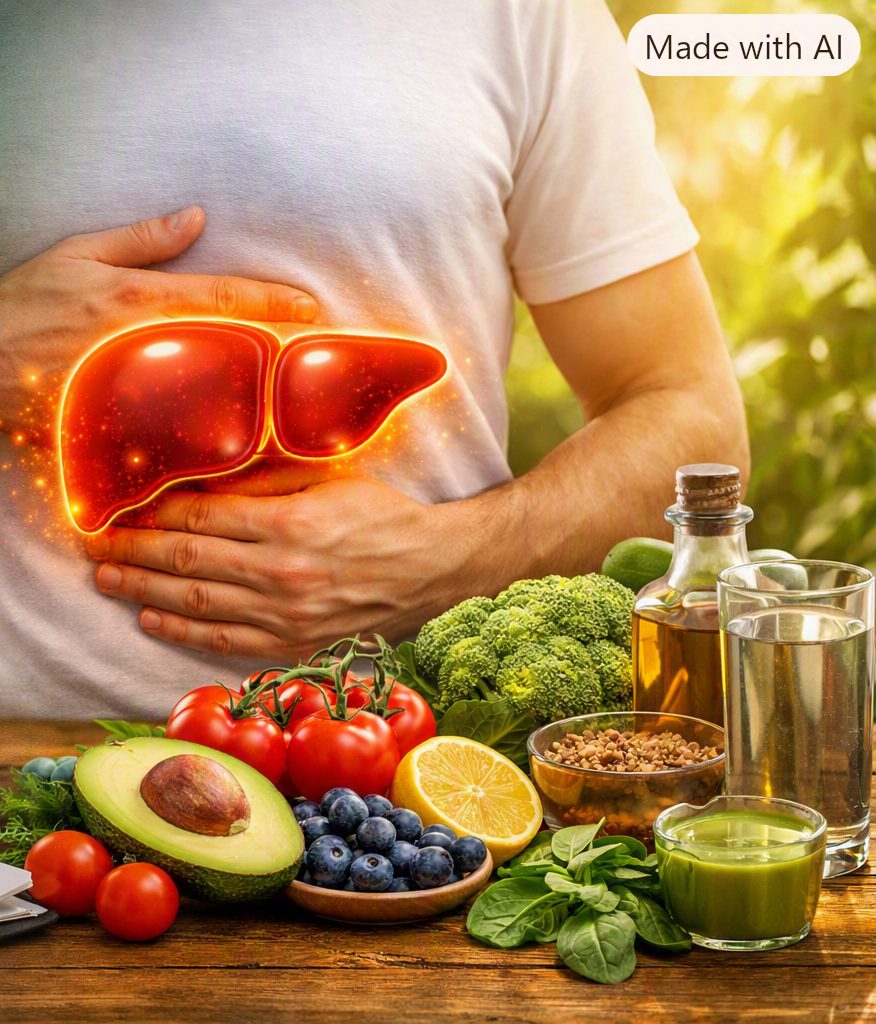
What Your Liver Does
Your liver is the body's largest internal organ and its main processing plant — everything you eat, drink, or absorb passes through it.
Filters Blood
Processes everything you eat, drink, breathe, and absorb — removing toxins, drugs, and waste from your bloodstream.
Produces Bile
Creates bile to break down fats and absorb vitamins A, D, E, and K — essential for digestion.
Stores Energy
Converts excess glucose into glycogen, then releases it when your body needs energy between meals.
Makes Proteins
Produces albumin and clotting factors that keep fluid in your bloodstream and help wounds heal.
Regulates Cholesterol
Creates cholesterol and carrier proteins, balancing HDL and LDL levels in your body.
Processes Medications
Metabolizes most drugs you take — a big reason liver health affects how medicines work in your body.
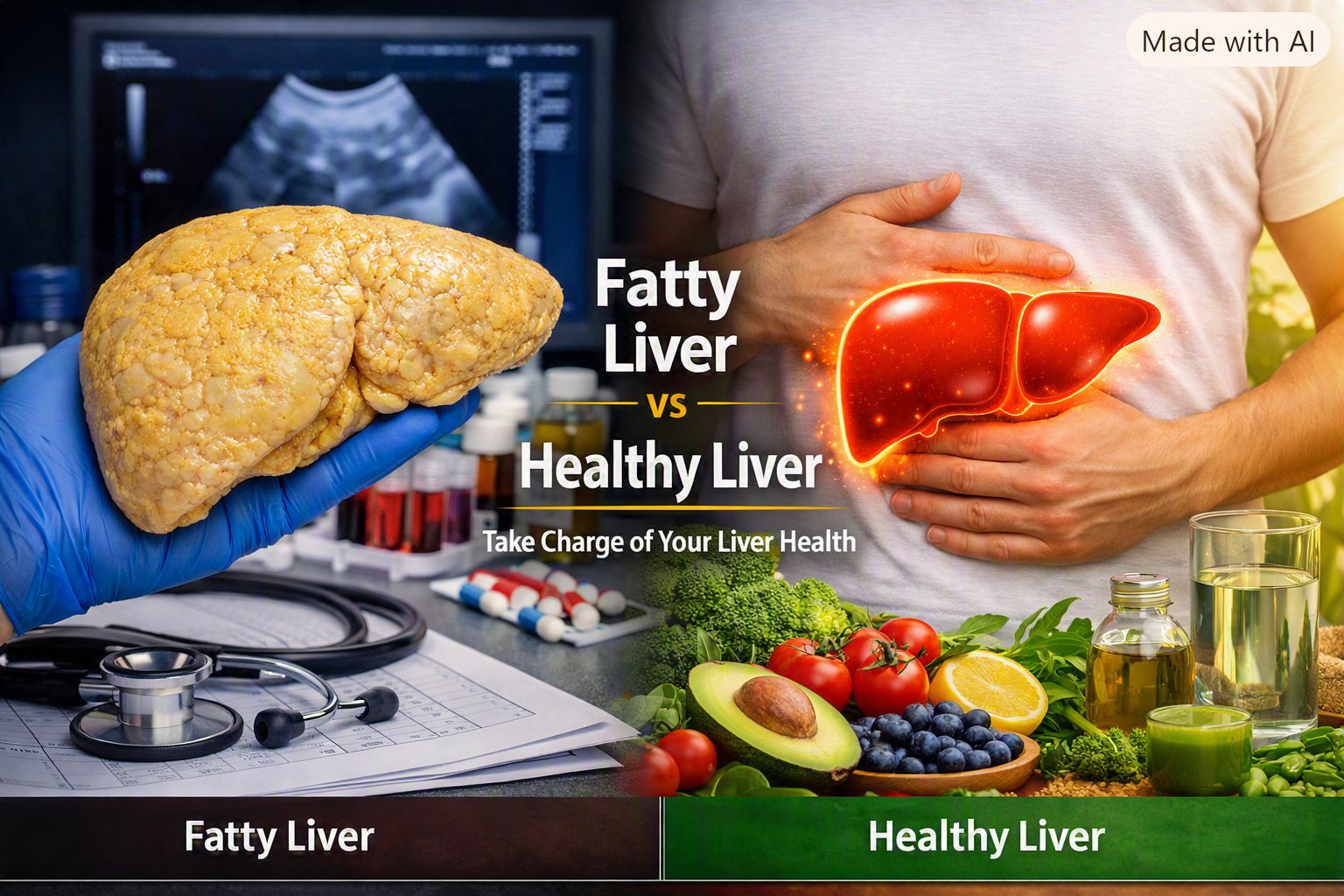
Risk Factors
Some risks are lifestyle-driven and modifiable; others are genetic or viral. Knowing yours helps you decide when to get tested.
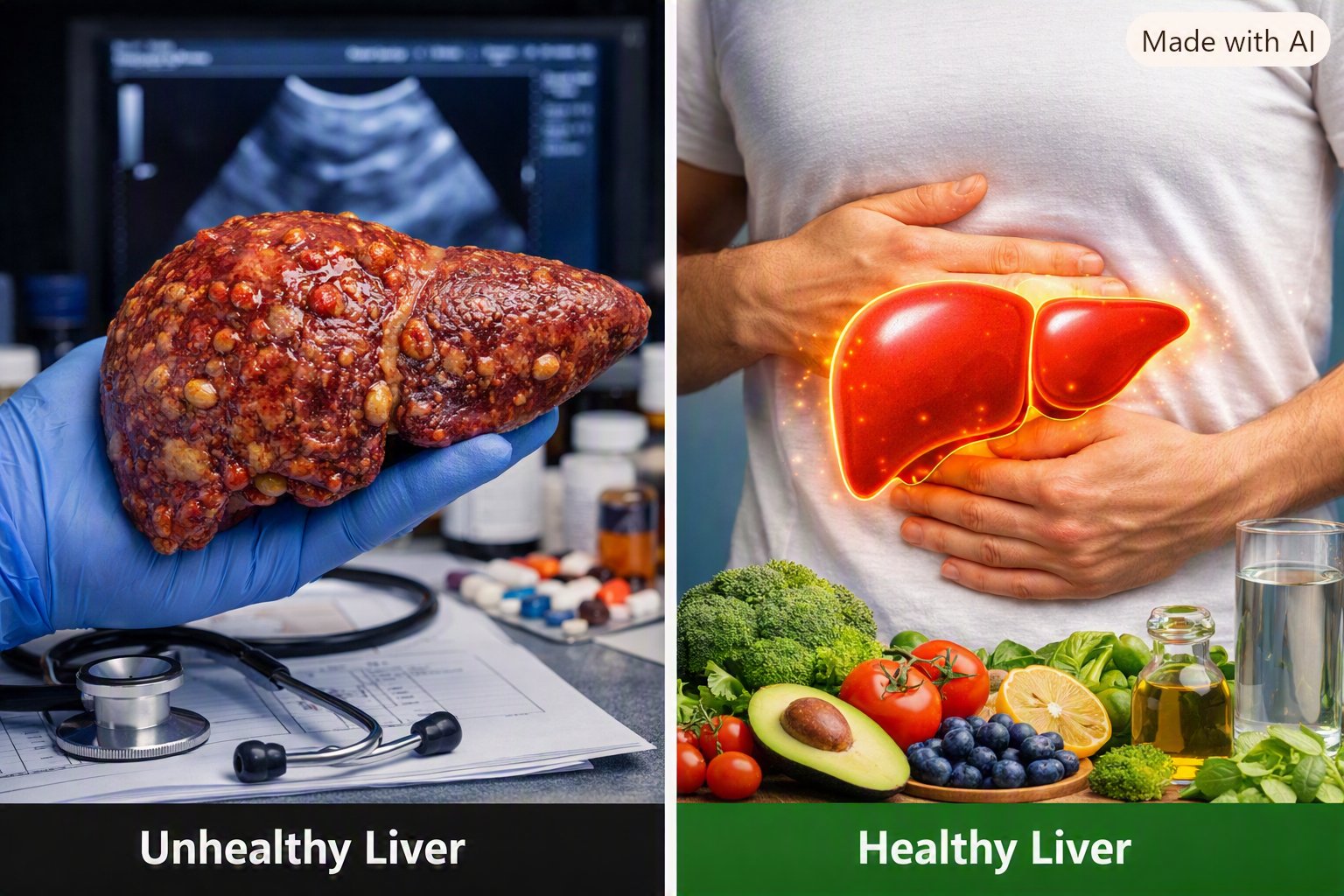
Excess Alcohol
Regular heavy drinking is a leading cause of liver disease. Even moderate drinking adds strain over time.
Obesity & Diabetes
Metabolic dysfunction-associated steatotic liver disease (MASLD) affects roughly 1 in 4 adults globally and is often silent until advanced.
Viral Hepatitis
Hepatitis B and C are major causes of cirrhosis and liver cancer. Vaccines exist for Hepatitis A and B.
Family History
Genetic conditions like hemochromatosis or Wilson's disease raise risk — know your family health history.
Certain Medications
Long-term use of some painkillers, antibiotics, and herbal supplements can affect the liver.
Regular Exercise
150 minutes of moderate exercise weekly is linked to notably lower fatty-liver risk. Movement is medicine.
Warning Signs
Liver disease is often called "silent" because symptoms appear late. Seek medical evaluation if you notice these signs.
Yellowing Skin or Eyes
Jaundice occurs when bilirubin builds up — one of the most recognizable signs of liver distress.
Abdominal Swelling
Fluid build-up (ascites) in the abdomen can signal cirrhosis or advanced liver disease.
Chronic Fatigue
Persistent tiredness that sleep doesn't fix — the liver's struggle to process toxins can drain your energy.
Dark Urine & Pale Stools
Tea-colored urine and clay-colored stools suggest bilirubin isn't being processed properly.
Itchy Skin
Bile salt build-up under the skin can cause persistent itching, especially on hands and feet.
Easy Bruising
The liver produces clotting factors — when damaged, you may bruise easily or bleed longer from cuts.
Liver-Friendly Diet
Food is one of the most powerful levers for liver health, especially for MASLD (fatty liver).
Stress, Cortisol & Carbohydrate Metabolism
Diet isn't only about what's on your plate — how your body handles stress changes how it processes the carbohydrates you eat, too. Here's the chain of events, in plain terms.
Stress triggers cortisol release. Physical or psychological stress prompts your adrenal glands to release cortisol, the body's main stress hormone.
Cortisol tells the liver to make more glucose. It activates liver enzymes that break down stored glycogen (glycogenolysis) and build new glucose from other sources (gluconeogenesis) — a short-term "fight or flight" response that raises blood sugar so you have fuel on hand.
Occasional stress is fine — chronic stress isn't. When cortisol stays elevated day after day rather than settling back down, blood sugar runs higher than it needs to, and the pancreas keeps releasing extra insulin to bring it back into range.
Cells stop responding well to insulin. Persistently high cortisol and insulin can drive insulin resistance, meaning more sugar and insulin circulate in the blood without being used efficiently by muscle and fat tissue.
The liver converts the excess into fat. Facing more sugar and insulin than it can use, the liver ramps up de novo lipogenesis (turning excess carbohydrate into fat), takes in more fat released from other tissues, and burns less fat for fuel — a combination that drives fat build-up inside the liver itself.
Leafy Greens
Spinach, kale, and arugula are rich in glutathione — an antioxidant that supports the liver's detox pathways.
Cruciferous Vegetables
Broccoli, cauliflower, and Brussels sprouts support the liver's natural detox enzyme activity.
Fatty Fish
Salmon, mackerel, and sardines provide omega-3s that can help reduce liver fat and inflammation.
Nuts & Seeds
Walnuts and flaxseeds bring antioxidants and healthy fats that support liver enzyme activity.
Added Sugar
Fructose is metabolized almost exclusively by the liver — excess sugar is a key driver of fatty liver.
Processed Foods
Trans fats, preservatives, and high sodium make the liver work harder. Cook fresh meals where you can.
Exercise for Liver Health
Even without weight loss, exercise directly reduces liver fat. Aim for a mix of these three types.
Aerobic
Brisk walking, cycling, or swimming for 30 min, 5 days a week — the most consistently effective type for burning liver fat.
Resistance
Bodyweight or weights 2–3x weekly. Builds muscle mass, which improves insulin sensitivity and liver metabolism.
HIIT
Short bursts of intense activity — 15–20 min sessions, 2x weekly, are linked to meaningful drops in liver fat markers.
When to See a Doctor
Follow this decision guide. When in doubt, book the appointment.
Do you have any warning signs (jaundice, abdominal swelling, dark urine, easy bruising)?
Are you overweight, diabetic, or do you drink alcohol regularly?
Has it been more than 12 months since your last liver function blood test?
Myths vs. Facts
Common misconceptions about liver health — and what the evidence actually says.
✕ Myth: "I can detox my liver with a juice cleanse."
Your liver detoxifies your body continuously on its own. There's no solid evidence that juice cleanses, detox teas, or liver flushes improve liver function — and some herbal "detox" products have actually been linked to liver injury.
✓ Fact: Coffee is linked to a healthier liver.
Multiple large studies associate 2–3 cups of coffee a day with lower rates of fibrosis, cirrhosis, and liver cancer, even in people with existing liver disease — both caffeinated and decaf appear to help.
✕ Myth: "Only heavy drinkers get liver disease."
MASLD (fatty liver linked to metabolic health) is now the most common liver condition worldwide, including in people who drink little or no alcohol. Obesity, diabetes, and metabolic syndrome are major drivers.
✓ Fact: Early liver damage can be reversible.
Fatty liver and even early fibrosis can improve with weight loss, diet changes, and exercise. The liver can regenerate — but usually only if the underlying cause is addressed before cirrhosis sets in.
✕ Myth: "Natural supplements are always safe for the liver."
Herbal products like kava, comfrey, and high-dose green tea extract have been associated with liver injury. "Natural" doesn't automatically mean "safe," especially at high doses or combined with medication.
✓ Fact: Losing 5–10% of body weight can meaningfully help fatty liver.
Research consistently links modest weight loss — just 5–10% of body weight — to reduced liver fat, less inflammation, and even fibrosis improvement in people with MASLD.
Alcohol & Your Liver
Your liver processes almost all of the alcohol you drink — which is exactly why heavy or prolonged use affects it more than almost any other organ. Here's how the risk actually builds, and where the commonly cited safety thresholds come from.
How Alcohol-Related Liver Damage Progresses
Fatty liver (steatosis). Fat starts accumulating in liver cells. This stage is usually reversible with abstinence and typically causes no symptoms.
Alcoholic hepatitis. Continued drinking triggers inflammation of liver tissue. Outcomes vary — from recovery with abstinence to progression toward liver failure in severe cases.
Cirrhosis. Long-term inflammation leads to permanent scarring. At this stage damage is irreversible and can lead to portal hypertension and liver failure.
Men
More than 14 drinks per week, or 4+ in a single sitting, is classed as at-risk drinking under U.S. clinical guidelines (NIAAA).
Women & Adults 65+
More than 7 drinks per week, or 3+ in a single sitting, is classed as at-risk drinking under the same guidelines.
Alcohol + Metabolic Risk
Alcohol use combined with obesity, type 2 diabetes, or existing MASLD compounds liver risk more than either factor alone.
The Early Stage Is Reversible
Fatty liver caused by alcohol typically improves within weeks of stopping or significantly cutting back — before scarring sets in.
Medications & Supplements: What Can Strain Your Liver
This is different from the Supplements page — this is general awareness of substances linked to liver strain, not a shopping guide. Never stop or change a prescribed medication based on this page; talk to your prescribing doctor first.
Acetaminophen / Paracetamol
Safe at recommended doses, but the single most common cause of acute liver failure when taken in excess — risk rises further when combined with alcohol.
NSAIDs
Ibuprofen, naproxen, and diclofenac at high doses or with long-term use — especially combined with alcohol — carry added liver risk.
Certain Antibiotics
Amoxicillin-clavulanate (Augmentin) is a leading antibiotic cause of drug-induced liver injury, usually from an immune-type reaction.
Antiseizure Medications
Phenytoin and carbamazepine can occasionally trigger immune-related liver inflammation, more often early in treatment.
Methotrexate
Used for autoimmune conditions and some cancers — long-term use, especially with alcohol, is linked to liver inflammation and scarring, so routine monitoring is standard practice.
Antifungal Medications
Fluconazole, itraconazole, and ketoconazole can affect the liver with extended use, ranging from mild enzyme changes to rarer, more serious injury.
Herbal & "Natural" Supplements
Kava, black cohosh, comfrey, and high-dose green tea extract are among the herbal products most consistently linked to liver injury — "natural" doesn't mean the risk is zero.
Statins
Widely and safely used long-term. They can cause a temporary rise in liver enzymes, which typically normalizes — routine bloodwork is precautionary, not usually a cause for alarm.
Frequently Asked Questions
Quick answers to the questions we hear most. Tap a question to expand it.
What's the difference between fatty liver, MASLD, and MASH?
"Fatty liver" describes fat build-up in the liver. MASLD (metabolic dysfunction-associated steatotic liver disease) is the current clinical term for fatty liver linked to metabolic risk factors like obesity, type 2 diabetes, or high cholesterol. MASH (metabolic dysfunction-associated steatohepatitis) is the more advanced, inflamed form of MASLD that carries a higher risk of progressing to fibrosis or cirrhosis.
Can fatty liver actually be reversed?
In its early stages, yes — often within weeks to months. Weight loss of just 5–10% of body weight, reduced alcohol and added sugar intake, and regular exercise are all linked to measurable reductions in liver fat. Once significant scarring (fibrosis or cirrhosis) has developed, damage is generally no longer reversible, which is why early action matters.
How much alcohol is actually "safe" for my liver?
There's no universally safe amount — risk is a spectrum, not a cliff edge. U.S. clinical guidelines describe more than 14 drinks/week (men) or 7 drinks/week (women and adults 65+) as at-risk drinking. See the Alcohol & the Liver page for the full breakdown.
What blood tests actually check liver health?
The most common are ALT and AST (liver enzymes that rise with cell damage), GGT (rises with liver strain, alcohol use, and bile duct issues), and bilirubin (rises when the liver can't process waste products properly). These are usually bundled into a standard "liver function test" (LFT) panel your doctor can order.
Is the Liver Fat Estimate calculator on this site a diagnosis?
No. It's an educational estimate based on a published research formula, not a diagnostic tool. It cannot tell you whether you have fatty liver disease — only a doctor, using proper testing such as blood work or imaging, can do that. See the Risk Calculator page for the full disclaimer.
What is a FIB-4 score and what does it tell me?
FIB-4 (Fibrosis-4 Index) is a free calculation from four values on a routine blood panel — age, AST, ALT, and platelet count — used to estimate the likelihood of advanced liver scarring (fibrosis). A low score makes advanced scarring unlikely; a high score doesn't diagnose it, but is usually a reason a doctor orders further testing, like elastography. Try the calculator on the Risk Calculator page.
What is the APRI score used for?
APRI (AST-to-Platelet Ratio Index) is another free, non-invasive score — calculated from AST and platelet count — that estimates the likelihood of significant liver fibrosis. It's often used alongside FIB-4 rather than instead of it, since the two scores can disagree at the edges. Neither is a diagnosis on its own; both are screening tools that help a doctor decide whether more testing is warranted.
Are liver support supplements backed by real evidence?
It varies a lot by ingredient. Some, like vitamin E and omega-3s, have real clinical trial evidence in specific contexts, usually under medical supervision. Others, especially some herbal "detox" products, have weak evidence and in rare cases have themselves been linked to liver injury. See the Supplements and Medication Safety pages for specifics.
Can a medication damage my liver even if I'm taking it exactly as prescribed?
Yes, in rare cases — this is called drug-induced liver injury (DILI), and it can happen even at correct doses due to individual sensitivity. It's uncommon, which is why it's not a reason to stop necessary medication on your own, but it's also why doctors periodically order liver bloodwork for certain drugs.
When should I actually see a doctor about my liver?
See the When to See a Doctor page for a full decision guide — but as a rule, any yellowing of skin or eyes, dark urine, abdominal swelling, or unexplained easy bruising warrants prompt medical attention, not a wait-and-see approach.
What is the best drink to repair your liver?
No single drink "repairs" the liver — that's not how liver healing works. The closest thing to real evidence is coffee: several studies link regular black coffee (2–3+ cups a day) to lower liver enzymes and a reduced risk of fibrosis progression in people with existing liver disease, though it's not a treatment on its own. Plain water supports overall health but has no special liver-repair effect, and "detox" juices and teas marketed as liver cleanses have no clinical evidence behind them. The real driver of liver recovery is removing the cause of damage, not any specific beverage.
What are the best foods for liver health?
No single "superfood" does the work alone, but the pattern with real evidence behind it looks like coffee, olive oil, nuts (almonds, walnuts), oily fish, leafy greens, oats, and legumes — broadly, a Mediterranean-style diet, which is what most fatty liver dietary guidelines actually recommend. These foods are linked to lower liver fat and inflammation, mainly by helping with weight management and reducing the saturated fat and added sugar that drive fat buildup in the first place — not through any special detoxifying property. See the Diet page for a full breakdown.
What is the fastest way to repair the liver?
There isn't a fast way, and it's reasonable to be wary of anything that claims otherwise. The liver does have real regenerative capacity, but the timeline depends entirely on what's being reversed: early fatty liver can measurably improve within weeks to a few months of weight loss and cutting alcohol, and early-stage fibrosis can reverse if the underlying cause is addressed soon enough — but cirrhosis, permanent scarring, generally doesn't reverse. The honest answer is that removing the cause as early as possible matters far more than any single remedy.
Do liver detoxes or cleanses actually work?
No credible clinical evidence supports commercial liver detox or cleanse products — this is a case where the marketing is well ahead of the science. Your liver already detoxifies your blood continuously, which is its job, and cleanse products aren't FDA-regulated, so they're not required to prove they work. Some ingredients used in "detox" blends have themselves, in rare cases, been linked to liver injury. What's actually shown to support liver health is much less exciting: limiting alcohol, maintaining a healthy weight, and avoiding unnecessary supplements.
What do elevated liver enzymes (ALT and AST) mean?
Elevated ALT or AST usually means liver cells are inflamed or under strain and leaking these enzymes into the bloodstream at a higher rate than normal — it's a sign something is affecting the liver, not a diagnosis of what. Causes range from mild and temporary (a new medication, a recent bout of heavy drinking, even intense exercise) to ongoing conditions like fatty liver, viral hepatitis, or autoimmune disease. Mildly elevated enzymes found on a routine panel are common and often resolve on their own, but persistent or significantly elevated results are worth following up on with a doctor.
Where is liver pain located, and what does it feel like?
Liver-related discomfort is typically felt in the upper right side of the abdomen, just under the rib cage — often described as a dull ache or a feeling of fullness or pressure rather than sharp pain. It's worth knowing that a lot of liver disease causes no pain at all until fairly advanced, since the liver itself has few pain-sensing nerves; what people usually feel is the liver's outer capsule stretching from swelling or inflammation. Persistent pain in this area, especially alongside jaundice, fever, or dark urine, is a reason to see a doctor rather than wait it out.
How long does it take for the liver to heal?
It depends heavily on what's being healed from, and there's no single timeline. Fatty liver can show measurable improvement within a few months of sustained weight loss and reduced alcohol intake. Fibrosis (early scarring) can also reverse, but generally takes longer and only if the underlying cause is removed early. Cirrhosis is different — the scar tissue is largely permanent, though even at this stage, treating the underlying cause can stop further damage and sometimes allow partial recovery of function. In every case, earlier intervention means a better and faster outcome.
What causes an enlarged liver?
An enlarged liver (hepatomegaly) isn't a diagnosis on its own — it's a sign something else is going on. Causes range widely: liver conditions like fatty liver disease, hepatitis, or cirrhosis; conditions elsewhere in the body like heart failure or certain cancers; and inherited conditions like hemochromatosis (iron overload) or Wilson's disease (copper overload). It often causes no symptoms and is found incidentally on a scan or exam, though when symptoms do appear they can include abdominal discomfort, fatigue, or jaundice. Because the causes range from mild to serious, it's always worth having a doctor investigate rather than assuming.
Is cirrhosis always fatal?
No — this is one of the more persistent myths about liver disease. Cirrhosis has two broad stages: compensated cirrhosis, where the liver has permanent scarring but still functions well enough that many people feel fine and can live for years, sometimes without knowing they have it; and decompensated cirrhosis, where the liver can no longer keep up and serious complications appear. What determines the outcome is mostly whether the underlying cause is treated and whether progression to decompensation can be prevented — which is exactly why early detection through tools like FIB-4 or APRI matters.
What's the difference between hepatitis A, B, and C?
They're three different viruses that share a name but not much else. Hepatitis A spreads through contaminated food or water, doesn't cause chronic infection, and resolves on its own — a vaccine prevents it. Hepatitis B spreads through blood, sexual contact, or from mother to child; adults often clear it, but infants and children infected with it are far more likely to develop lifelong chronic infection, and a vaccine is routinely given to infants. Hepatitis C spreads mainly through blood-to-blood contact, like shared needles, has no vaccine, and over half of new infections become chronic — but modern antiviral treatment now cures more than 90% of hepatitis C cases.
Latest Research
A snapshot of recent, peer-reviewed developments in liver science. This is a research summary for awareness only, not a treatment recommendation — talk to your doctor about what applies to you.
Global MASLD cases projected to reach 1.8 billion by 2050
A global burden analysis found MASLD cases surged 142.7% between 1990 and 2023 — reaching an estimated 1.3 billion people, or roughly 1 in 6 adults worldwide — and are projected to climb to 1.8 billion by 2050 if current trends continue. Most of the projected growth comes from early-stage disease driven by rising rates of obesity, high blood sugar, and smoking, reinforcing prevention as the highest-leverage response.
NAFLD has been renamed MASLD
International experts introduced "metabolic dysfunction-associated steatotic liver disease" (MASLD) to better reflect the metabolic roots of the condition. Diagnosis now centers on steatosis plus at least one metabolic risk factor — such as type 2 diabetes, obesity, or high cholesterol — regardless of alcohol intake, which has broadened how the condition is studied and treated.
A common B-vitamin shows promise against fatty liver
Researchers identified a microRNA (miR-93) that drives MASLD progression, and found that vitamin B3 (niacin) — an inexpensive, already-approved supplement — may help suppress it. It's early-stage research, not a proven treatment, but it points to a low-cost avenue worth watching.
New investigational drug targets MASH directly
Scientists identified a compound (ION224) designed to block a pathway involved in metabolic dysfunction–associated steatohepatitis (MASH), the more aggressive form of fatty liver disease that can progress to cirrhosis and liver cancer. It's in earlier-stage development, alongside other emerging MASLD/MASH drug candidates.
Gene-expression changes linked to liver fibrosis risk
An international team found altered expression of specific genes tied to liver fibrosis in people with obesity and MASLD, offering a possible new target for predicting or slowing disease progression. The team is now studying whether the link is causal.
Non-invasive testing is replacing routine biopsy
Updated clinical guidance increasingly favors non-invasive scoring tools — FIB-4, the ELF blood test, and elastography-based liver stiffness scans — over biopsy for staging fatty liver disease in most patients, making risk assessment more accessible.
Liver Support Supplements
Products featured here may be TGA-listed medicines, food-classified supplements, US dietary supplements regulated under FDA/DSHEA, or supplements notified under an EU member state's food supplement rules — each has a different regulatory basis, noted where relevant. Always consult your doctor before starting any supplement.
Milk Thistle (Silymarin)
From $19.95The most studied herbal supplement for liver support, often standardised to 80% silymarin, used for antioxidant and anti-inflammatory support.
Available in: 🇦🇺 Australia · 🇺🇸 United States · 🇪🇺 European Union
- Standardised extract: 140–420 mg silymarin daily
- Best evidence for Amanita mushroom poisoning and toxin-related liver injury
- Mixed evidence for MASLD; may modestly improve liver enzymes
- Generally well tolerated; rare mild digestive upset
- May interact with medications metabolised by CYP450 enzymes
N-Acetyl Cysteine (NAC)
From $24.50A precursor to glutathione, the liver's master antioxidant. NAC supports the body's natural detoxification pathways.
Available in: 🇦🇺 Australia · 🇺🇸 United States · 🇪🇺 European Union
- Common dose: 600–1,200 mg daily (medical supervision for higher doses)
- Primary clinical use: paracetamol overdose antidote in hospitals
- May support glutathione levels under oxidative stress
- Some evidence for insulin resistance in PCOS/metabolic syndrome
- Can cause nausea at higher doses — take with food
Vitamin E (Mixed Tocopherols)
From $16.90High-quality vitamin E is sometimes used for MASLD/MASH under medical supervision.
Available in: 🇦🇺 Australia · 🇺🇸 United States · 🇪🇺 European Union
- Studied dose for NASH: 800 IU/day of mixed tocopherols
- Shown in some trials to reduce liver enzymes and steatosis
- Not recommended for people with diabetes or heart disease without medical oversight
- High doses may raise bleeding risk — stop before surgery
- Look for "mixed tocopherols" rather than synthetic dl-alpha-tocopherol
Omega-3 Fish Oil
From $22.00High-EPA/DHA omega-3s may help reduce liver fat and inflammation markers in people with MASLD.
Available in: 🇦🇺 Australia · 🇺🇸 United States · 🇪🇺 European Union
- Effective dose: 2–4 g combined EPA+DHA daily
- Associated with reduced liver fat and improved liver enzymes in meta-analyses
- Also benefits triglycerides and cardiovascular health
- Choose molecularly distilled products to avoid contaminants
- May increase bleeding risk at high doses — caution with anticoagulants
Are You a Supplement Brand?
If you make a liver-support supplement that's legally sold in Australia, the United States, and/or the European Union and would like it considered for featuring on this page, submit your product details for review — including which regions it's legally available in. Every submission is checked before anything goes live.
Liver Health Risk Calculator
A quick lifestyle-based risk screen. This is not a diagnosis — it helps you decide whether to bring up liver health with your doctor.
Liver Health Self-Check
Check the items that apply to you. For awareness only — not a diagnosis.
I drink alcohol more than 3–4 times per week
I am overweight or have been told I have fatty liver
I have type 2 diabetes or prediabetes
I take multiple medications or supplements daily
I have noticed yellowing of my eyes or skin
I have a family history of liver disease
I rarely exercise (less than 2 hours per week)
I eat processed or fried foods most days